
The Dehumidifier Running Not Lowering Humidity? Here’s What’s Wrong
-
By Gary Goh
- Last Update
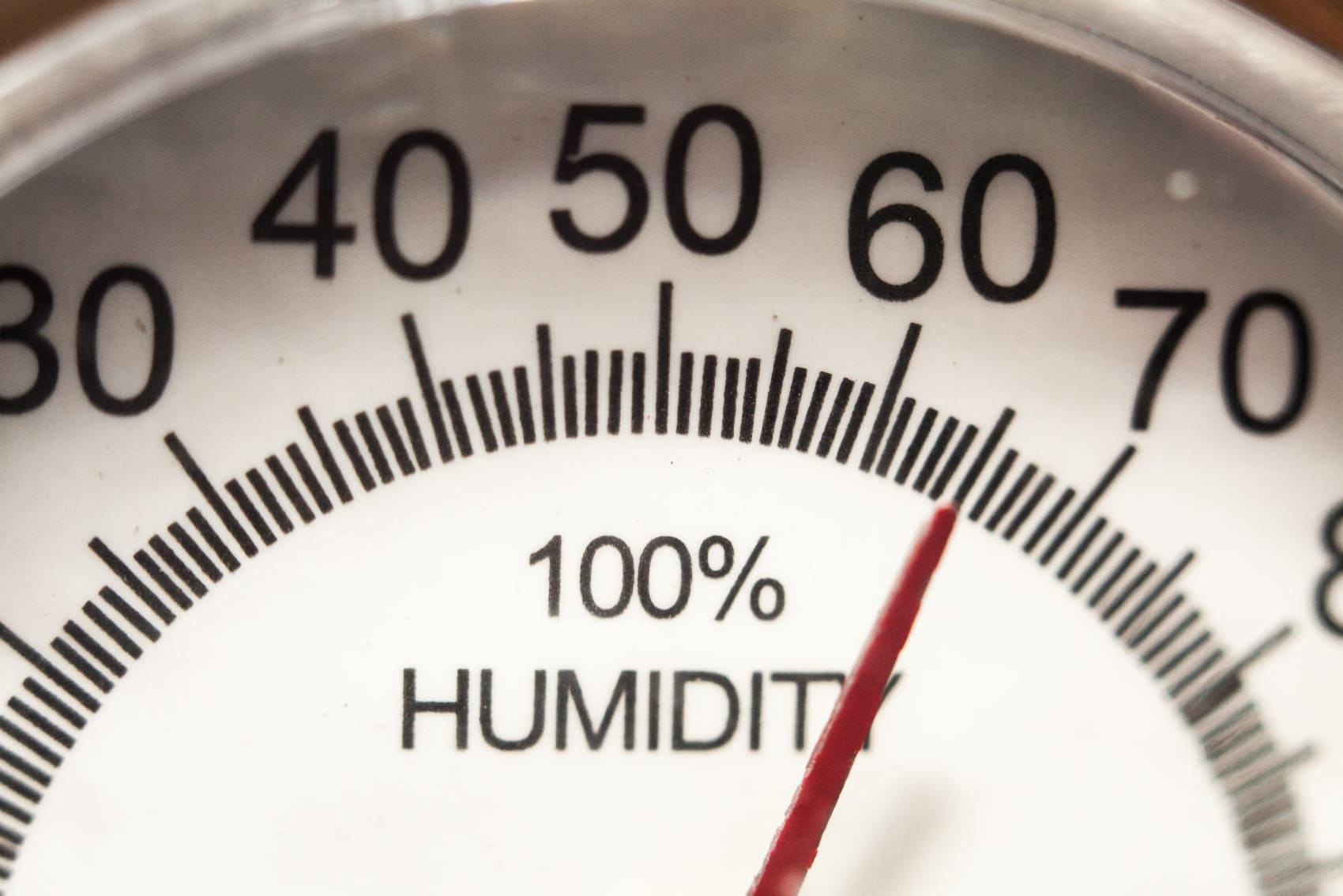
The Reason Why A Running Dehumidifier Not Lowering Humidity
An industrial dehumidifier that runs absolutely fine but doesn’t manage excessive humidity is always fixable. Let’s help you pinpoint the trouble so you know what to do to fix it.
Cause #1 — Unit Is Too Small for the Space
Is your industrial dehumidifier turning on but not performing? It could be due to the size of your dehumidifier. You might have invested in a small dehumidifier for your industrial space that must not be appropriate for the current humidity load. Look into the size of your dehumidifying unit if it is functioning normally but the humidity level stays the same. You might need a bigger one for the job. As you know, the industrial dehumidifiers are rated in PPD that is liters or pints per day. The real-world performance of a dehumidifying unit in alternate conditions can be different. Therefore, while selecting the size of your dehumidifier you must also consider the real-world conditions along the rated capacity of the unit. This helps you choose the right size for your dehumidifier. Just like if you choose a dehumidifier on the basis of rated capacity and ignore the other factors. The factors like ceiling height, high infiltration, area of the floor, moisture load that comes from business processes, equipment, and people— your commercial dehumidifier will be undersized and so would not perform the way it should.
How to rule it out?
- Measure the area dimensions accurately in cubic footage (length × width × height). Don’t just rely on the square footage alone as the ceiling height adds moisture load that the dehumidifier is to process.
- Analyze the Moisture Sources: Consider moisture sources like open drains, wash-down operations, wet materials, human occupancy, air exchanges, and any other load.
- Identify the Unit’s Real-world Capacity considering your specific conditions: Check the dehumidifier’s capacity rating in pints per day in relevance to the specific conditions of your industry.
- Monitor the Runtime: If the dehumidifier operates 24/7 but never reaches its setpoint–be sure that the unit’s capacity is insufficient.
The Fix:
- Invest in an appropriately sized dehumidifying unit.
- Use additional dehumidifiers to deal with the issue.
- Consult with a professional dehumidification expert for better advice.
Cause #2 — Clogged Air Filter
An industrial dehumidifier also underperforms when the air filters are clogged. The industrial environments cause more strain on the air filters. A filter with dust, particulates, fibers, and airborne debris blocks the air flow across the evaporator coil and hinders the dehumidification process. The dirty filters restrict the dehumidifier’s ability to extract moisture from the humid air.
How to rule it out?
Inspect the filters of the dehumidifier. You must be able to see the light through the filters to ensure it’s not dirty. Also, see if the filter is placed at the right spot. It must not be dislodged so that the moisture-ridden may pass through and get processed.
The Fix: Remove the filters and clean them immediately. Make a maintenance routine of cleaning the filters. Replace the clogged air filters if you find any of them damaged.
Cause #3 — Frozen Coils
Another cause of your underperforming but technically fit commercial dehumidifier can be the frozen coils. When the evaporator coils are frozen they prevent the required exchange of heat and moisture removal. In this case too, the dehumidifier unit runs smooth but the moisture level in the space stays the same.
How to rule it out?
You can visually inspect the coils to ensure if there are any traces of ice layering on them. Look for the unrestricted airflow at both sides–intake and exhaust.
The Fix:
Simply turn the dehumidifier unit off and let the evaporator coil defrost. Don’t forget to address the root cause of frozen coils to avoid it in the future.
Cause #4 — Too Much Moisture Infiltration
Another cause of an underperforming industrial dehumidifier can be the moisture infiltration. Your dehumidifier unit must be rightly-sized, maintained, and doing its job. However, still if the unit doesn’t work you must look into the frequency of moisture infiltration.
How to rule it out?
Look for any sources of moisture infiltration. There could be any leaks, sealing issues, or too much ventilation or any open space. There could also be a high level of transition of people contributing to the high moisture content.
The Fix:
You can rule this out by reducing the moisture infiltration from everywhere possible. You can seal the gaps, install strip curtains or high transition walkways and doors. Also, you can separate the areas with wet processes from other spaces to make your dehumidifier perform better. Moreover, control the exchange of large volumes of air from the outside of the building to reduce moisture infiltrations and let the dehumidifier perform.
Cause #5 — Exhaust Recirculating
One cause of an underperforming commercial dehumidifier unit can be a recirculating exhaust. This happens when the dehumidifier is not properly installed. Since the industrial dehumidifiers exhaust warm and humid air after the dehumidification process which needs to be thrown out. If the same air is pushed back into the dehumidifier’s own intake, the unit will never reduce excessive moisture.
How to rule it out?
- Assess the airflow path of the exhaust. See if the unit is discharging into the same room or closer to the intake.
- Look into the positioning of the dehumidifier. Check whether the unit is positioned in a corner or alcove that traps exhaust air.
- Rule out any leaky ducks where applicable.
The Fix:
Make sure that the exhausted air is not going into the intake of the dehumidifier. If the unit is placed in a compact space, make sure that the dehumidifier’s exhaust is ducted to any adjacent space. There must be sufficient clearance space around the dehumidifier –12-24 inches–for the unit to perform.
Cause #6 — Low Refrigerant
If you have a refrigerant based commercial dehumidifier, make sure that the refrigerant is not low. The refrigerant lets the evaporator coil to go cold and condense down the moisture from the air. This is the major part of a dehumidifier.
Low refrigerant causes a compromised cooling capacity, freezing coils, and also undermines the dehumidification performance. Low refrigerant reflects a leakage in the system that makes the dehumidifier underperform despite being technically sound.
How to rule it out?
- You can assess it from the uneven ice on the evaporator coils.
- Coils freezing unevenly or partially.
- The exhausted air becomes warmer.
- There is no water collection in the bucket.
- You will find more signs of condensation on the doors and windows.
- The dehumidifier runs 24/7 but never reaches the required humidity level.
The Fix:
Go for professional inspection and repair by a licensed HVAC/R technician.
Cause #7 — Failing Compressor
A commercial or industrial dehumidifier may stop performing if its compressor is not doing its job right. The compressor pressurizes the refrigerant and carries out the entire refrigeration process. The dehumidification efficiency significantly drops when the compressor fails partially or completely.
How to rule it out?
- The dehumidifier keeps on functioning but the air never gets warm.
- There is no water collected in the bucket.
- Unusual noise and vibration.
- Look into the electrical components like relays, capacitors, or overload protectors.
The Fix:
- Professional examination by an expert.
- Reach out to your vendor for any warranty claims for replacement.
Bottom Line
A running commercial or industrial dehumidifier can stop lowering moisture content from the air. This is when you need to assess the root cause of these lowered humidity levels and then address it there and then. So just look into the unit sizing, airflow, freezing coils, moisture infiltration, unit placement, and issues related to refrigerant or compressor. Troubleshooting here can help you sort this issue out in little to no time. Moreover, it is always recommended to consult a dehumidification expert to professionally handle and troubleshoot the issues in little to no time.
You May Also Like
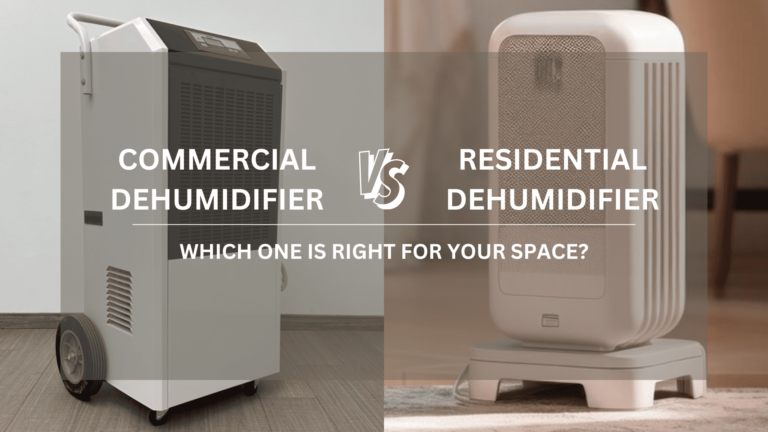
Commercial Dehumidifier vs Residential: Which One is Right for Your Space?

Hey there, I’m Cloud from Joe Air! An expert in dehumidifiers and humidifiers. How can I help you?